How many hours in Rust before you stop being a noob?
Around 500 hours, though a lot depends on the player. What you look like at 50, 200, 1,000 and 3,000 hours, and why it takes some people months and others years.
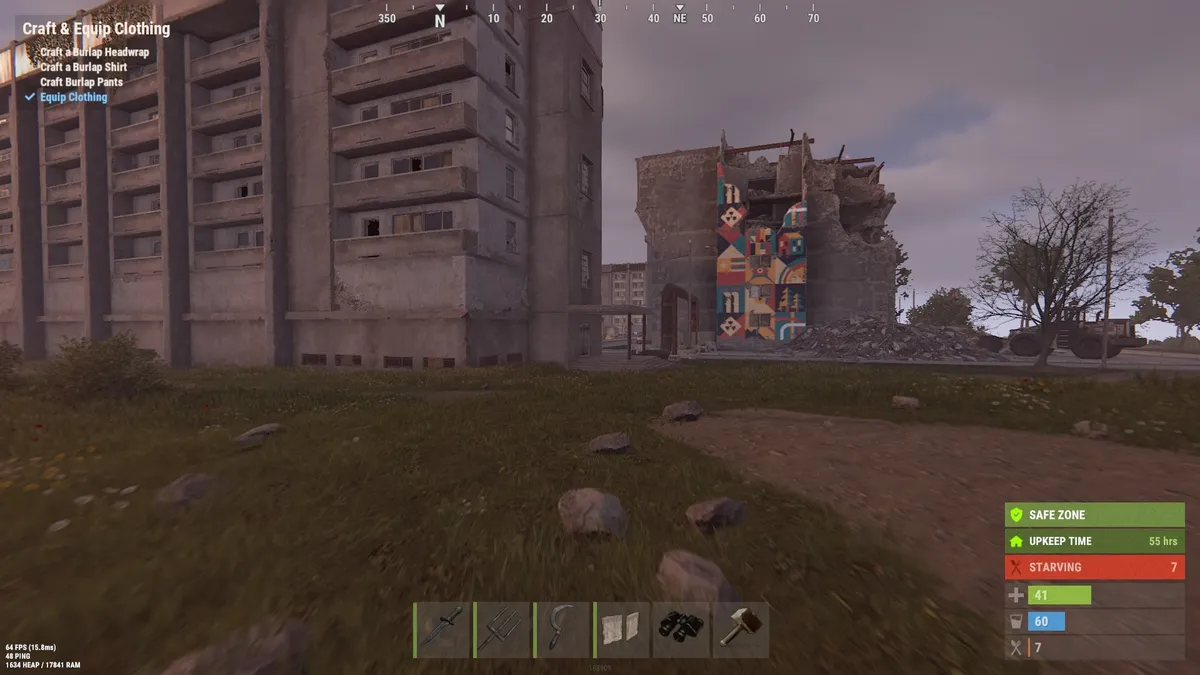
Around 500 hours. That number isn’t official: Rust hands out no ranks, and players have argued about the line for years. On r/playrust you’ll find someone with 200 hours calling themselves a noob, and someone else who says a teammate under 1,000 is little more than a bullet sponge at Oil Rig.
And hours tell you very little until you know who played them.
Why it’s different for everyone
Rust is a reluctant teacher. Tutorial Island lasts about half an hour, and after that you’re on your own. So much of it comes down to how you learn: one player gets raided, then goes off to find out how the door fell and what to build instead, while another dies the same way twenty evenings in a row. Time in shooters and survival games helps. A friend with a couple of thousand hours helps more, because they’ll explain in a minute what would take you a week alone.
Then the calendar gets involved. Here’s what the same 500 hours looks like:
| How much you play | Time to reach 500 hours |
|---|---|
| 6 hours a day | about 3 months |
| 2 hours a day | about 8 months |
| 10 hours a week | roughly a year |
| 2 hours a week | almost 5 years |
Someone playing eight hours a day racks up 56 hours in a week and is already past the total beginner stage. A couple of hours at the weekend is harder, and the maths is only part of it. The forced wipe comes every month, plenty of servers wipe more often, a base with no resources in the Tool Cupboard decays, and your neighbors keep playing while you’re away. On two hours a week you’ll rarely see the late stage of a wipe, so you end up replaying the opening again and again. The hours add up, but very few of them are raids or Oil Rig runs.
What your hours say about you
Again, these numbers are approximate. They’re our own estimate for regular vanilla servers, not a rule. A quick learner will skip a row, and for someone else a single row can take twice as long.
| Hours | Who you are | What it looks like |
|---|---|---|
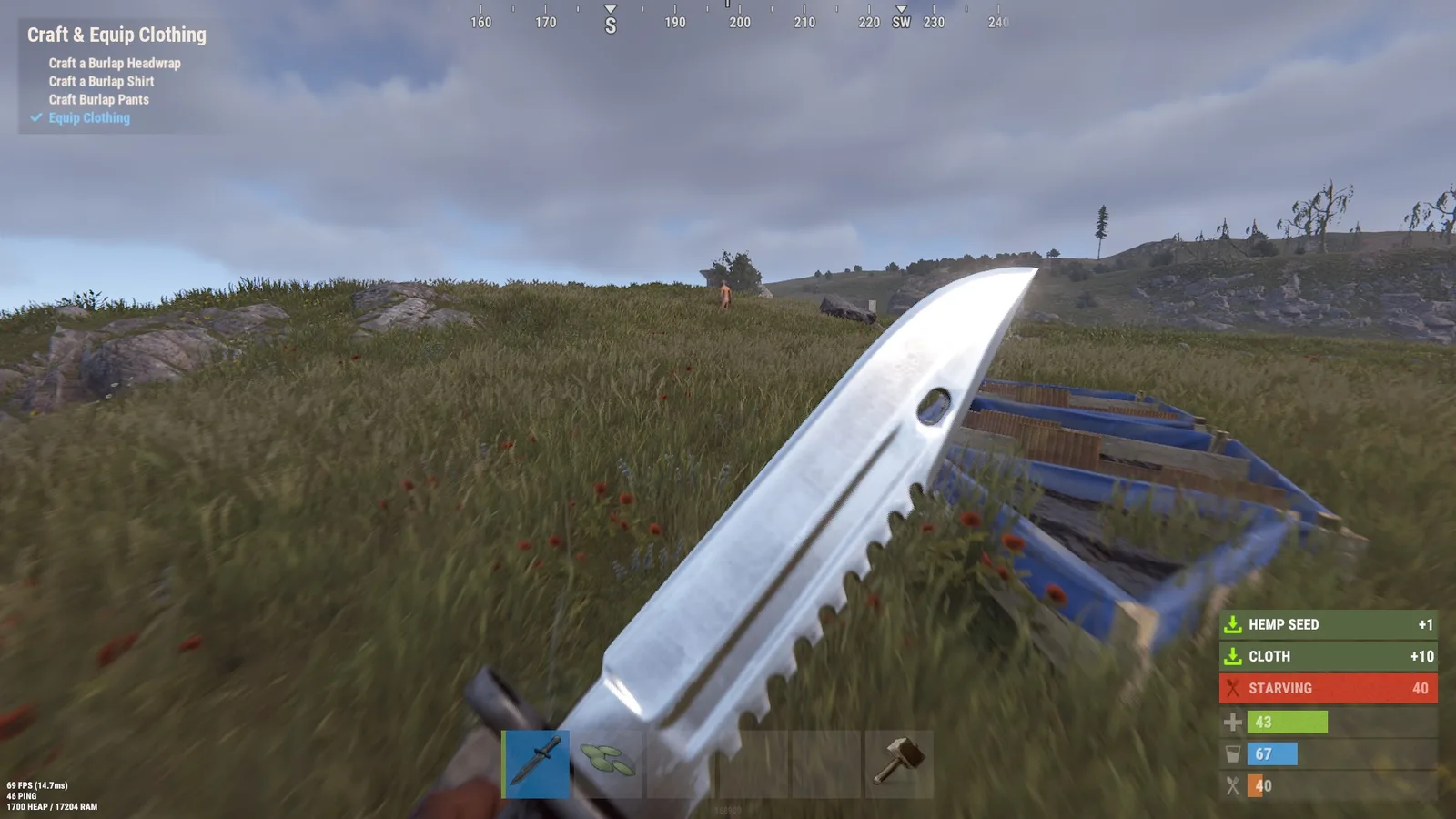
| 0–50 | Total beginner | Dies to everything, hunger and cold included. Learning to gather, craft clothes and place a sleeping bag |
| 50–200 | Noob | Has a small house, a Tool Cupboard and a code lock, but the base lasts until the neighbors show up. Panics in fights and loses loot by the stack |
| 200–500 | Beginner | Knows workbenches, the recycler and the nearby monuments. Wins the odd fight, and the base isn’t all wood anymore |
| 500–1,000 | Average player | No longer a noob. Understands keycards and raid costs, controls AK recoil, builds airlocks |
| 1,000–3,000 | Experienced | Runs Oil Rig and Cargo Ship, organizes raids, plans the wipe ahead of time |
| 3,000+ | Veteran | Reads the server by sounds and explosions, designs bases for a specific wipe, teaches everyone else |
The real shift happens right around 500 hours. Before that you mostly react to whatever happens to you: someone attacked, someone raided, the food ran out. After it you start thinking ahead about what to farm by evening, which monument will pay off today, and whether that fight is worth joining at all.
When hours lie
Steam counts every minute the game is running. A night spent by the furnaces while ore smelts counts the same as a raid, so 2,000 hours on a profile can easily be 800 hours of actual play.
Where those hours came from matters too. On x10 servers resources pour in, on PvE nobody shoots you in the back, and habits from either will serve you badly on a vanilla wipe. Knowledge and aim also grow separately. Some players can quote the cost of any raid and still lose every gunfight.
You can skip the counter altogether. Join a fresh wipe alone. If by the end of the first evening you have a house with a Tool Cupboard and a lock, a workbench and a gun, and meeting a stranger doesn’t end in panic, nobody will call you a noob. Still deciding whether to start at all? Read our Rust review.